
CONTACT US
-
 Telehone: +86 15075803959WhatsApp: +86 15075803959WeChat: +8615075803959
-

-
 Zhanggehou Rubber and Plastic Base, Jing County, Hebei Province
 -


PTFE (polytetrafluoroethylene) corrugated tubes are widely used in the semiconductor, chemical, and medical fields due to their excellent chemical inertness (withstanding strong corrosive media such as 98% concentrated sulfuric acid and aqua regia) and wide temperature resistance (long-term use from -200 ℃ to+260 ℃). However, its natural high insulation can easily cause static electricity accumulation, posing a safety hazard when transporting flammable media or precision electronic chemicals. The anti-static coating has become a key technology to solve this contradiction by endowing PTFE surface with conductivity. This article will delve into the process implementation and performance verification system.
1、 The core process of anti-static coating
The performance of anti-static coatings depends on a rigorous process flow, and each step requires precise control:
1)Surface treatment of substrate
The cleanliness and roughness of the substrate are the determining factors of coating adhesion. It is necessary to proceed in sequence:
• Degreasing treatment: Thoroughly remove oil stains and residual organic matter;
Mechanical polishing or chemical etching: increase the surface roughness to Ra 1.5~3.0 μ m to enhance the mechanical anchoring effect;
• Phosphating/anodizing (for metal substrates): forming a microporous structure to enhance bonding strength.
2)Conductive coating formula and coating
Changing the insulation properties of PTFE by adding conductive materials:
• Conductive fillers: such as carbon nanotubes, PEDOT: PSS (poly (3,4-ethylenedioxythiophene polystyrene sulfonate), reducing surface resistance to 10 ⁶~10 ⁸ Ω/sq;
• Coating process:
Spray method: high-pressure air atomized suspension, suitable for complex shaped corrugated pipes;
Immersion method: Fully immersed in PTFE conductive suspension, suitable for mass production.
3)High temperature sintering and solidification
Key stages of coating formation:
Step heating: Raise the temperature to 370-400 ℃ at a rate of 5-10 ℃/min to avoid cracking caused by thermal stress;
• Thermal insulation sintering: Maintain for 30 minutes to melt and crosslink PTFE particles, forming a network of conductive fillers;
• Speed controlled cooling: prevent coating peeling caused by sudden cooling.
2、 Core testing standards for anti-static performance
The reliability of anti-static coatings needs to be verified from multiple dimensions, including electrical, mechanical, and environmental stability testing
1)Electrical performance testing
Surface resistivity: measured using the four probe method according to GB/T 1410 or IEC 60093, with a standard range of 10 ⁶~10 ⁹ Ω (both anti-static and safety);
Static decay test: According to ISO 14309, simulate the time for charge dissipation after frictional charging, with a requirement of less than 2 seconds.
2) Coating reliability testing
Adhesion: According to ASTM D3359 grid method or GB/T 5210 pull-out method, the coating is required to have no peeling (peeling in the grid area is less than 5%);
Wear resistance: Under the GB/T 1768 standard, the resistance fluctuation after 500 cycles of rotating the grinding wheel test is ≤ 10%.
3) Environmental tolerance verification
• Chemical corrosion resistance: Soak in acid (30% H ₂ SO ₄) and alkali (20% NaOH) for 240 hours, with no change in resistance or appearance;
• Thermal stability: ASTM D648 hot deformation test, maintained at 260 ℃ for 100 hours, the coating has no cracks or bubbles.
3、 Industry Applications and Innovation Trends
The anti-static coating significantly expands the application scenarios of PTFE corrugated pipes:
In the semiconductor field, when transporting photoresist, the surface resistance should be ≤ 10 ΩΩ to avoid electrostatic breakdown of the wafer;
Hydrogen energy system: In the 70MPa high-pressure hydrogen pipeline, an anti-static coating is applied to prevent hydrogen explosion;
Medical equipment: Complies with FDA 21 CFR 177.1550 standards, and has both anti-static and biocompatibility properties.
Technological frontiers:
Intelligent coating: Integrated fiber optic sensing (FBG), real-time monitoring of coating damage and electrostatic risk;
Self repairing material: Microcapsules wrap conductive repair agents, automatically filling cracks and restoring conductive pathways.
Conclusion
The PTFE corrugated tube anti-static coating solves the electrostatic dilemma while retaining the inherent advantages of PTFE through precision surface engineering and conductive material modification. Strict process control (such as step sintering) and multi-dimensional performance verification (electrical mechanical environmental three loop testing) ensure its reliability under extreme working conditions. With the application of intelligent self-healing technology, anti-static coatings are evolving from "passive protection" to "active perception", providing safer flexible connection solutions for high-precision and cutting-edge industrial fields.
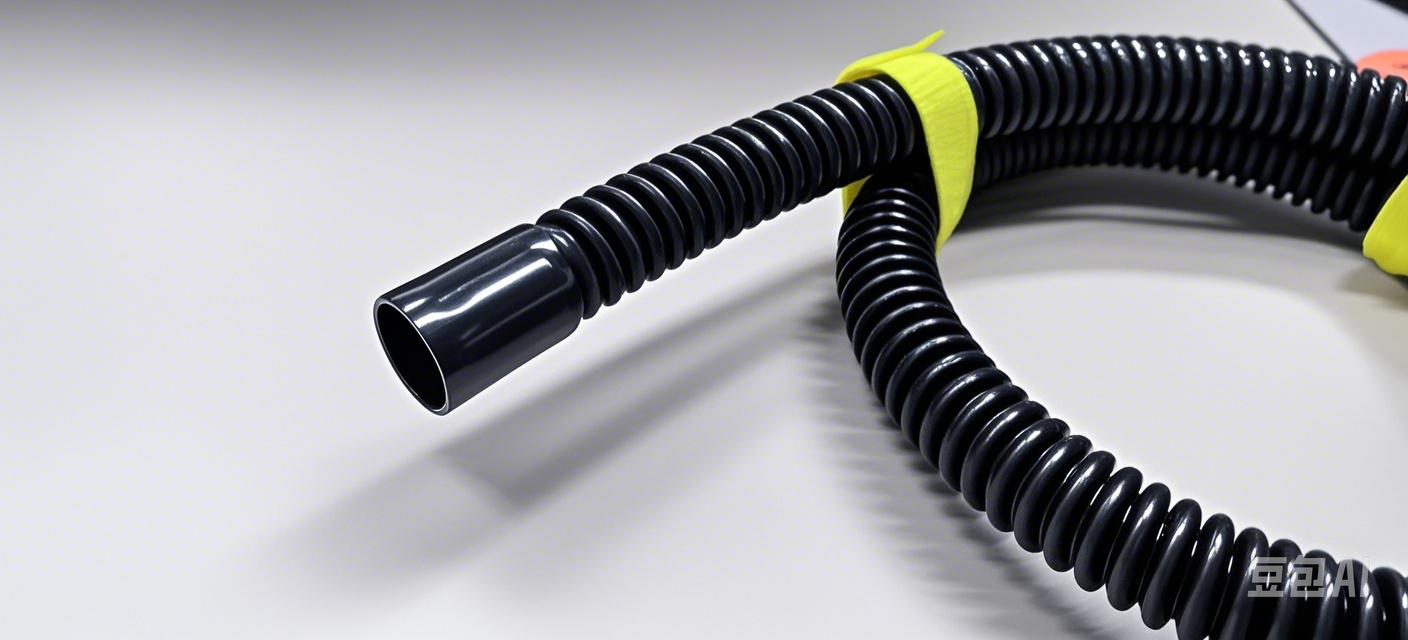
We are committed to providing high-quality rubber and plastic hose products and services.
With a professional team, advanced technology, and exceptional customer service,
we create lasting value and help our customers achieve remarkable growth.
Hebei Biaohui Rubber& Plastic Products Co., Ltd. is a manufacturer and supplier of rubber hoses, plastic hoses, and rubber products. The main products include TPU layflat hoses, industrial hoses, material conveying hoses, silicone hoses, PTFE hoses, stainless steel metal hoses, and rubber plastic products.
Our company's products are characterized by high pressure resistance, high temperature resistance,wear resistance, strong flexibility, good pulse performance, and easy maintenance. They are widely used in fields such as coal, petrochemicals, metallurgy, mining, construction, water conservancy engineering, electricity, agriculture, machinery, electronics, textiles, etc.
All your issues will be resolved by the team, updated promptly, responded to quickly, and delivered quickly。