
CONTACT US
-
 Telehone: +86 15075803959WhatsApp: +86 15075803959WeChat: +8615075803959
-

-
 Zhanggehou Rubber and Plastic Base, Jing County, Hebei Province
 -


The basic processes of rubber hose production include rubber mixing processing, fabric and canvas processing, rubber hose molding, vulcanization, etc. Rubber hoses with different structures and skeletons have different processing methods and molding equipment for their skeleton layers. Full rubber hose, as it does not contain a skeleton layer, only requires the use of an extruder to press out the hose; The sandwich rubber hose requires the use of a molding machine that wraps the adhesive tape onto the inner adhesive layer; The suction hose needs to be wrapped with a metal spiral wire before being wrapped with inner glue during molding。
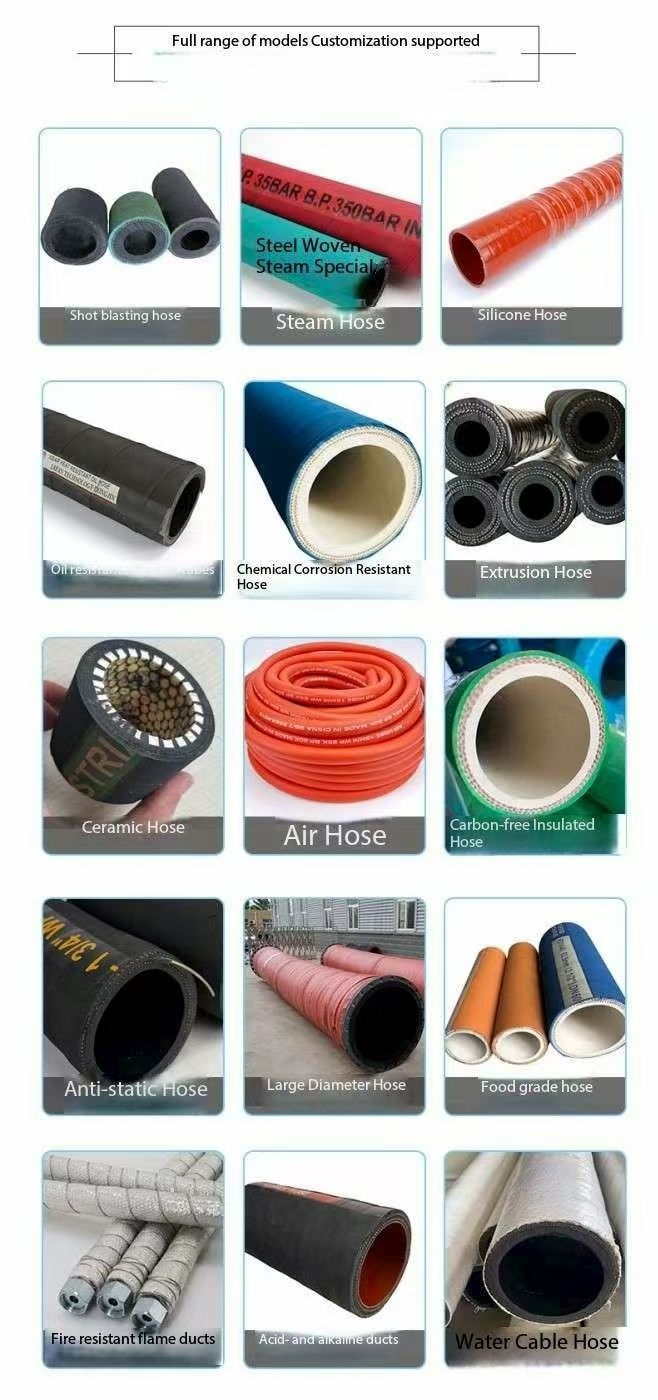
The basic processes of rubber hose production include rubber mixing processing, fabric and canvas processing, rubber hose molding, vulcanization, etc. Rubber hoses with different structures and skeletons have different processing methods and molding equipment for their skeleton layers.
Full rubber hose, as it does not contain a skeleton layer, only requires the use of an extruder to press out the hose; The sandwich rubber hose requires the use of a molding machine that wraps the adhesive tape onto the inner adhesive layer; The suction hose needs to be wrapped with a metal spiral before being wrapped with inner glue during molding; Weaving and winding rubber hoses require the use of specialized fabric weaving machines or winding machines; Knitted rubber hoses require the use of knitting machines, etc.
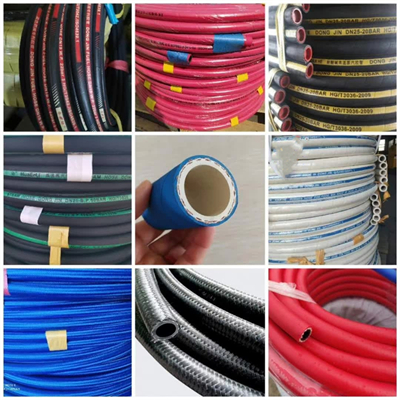
The molding methods of rubber hoses are mainly divided into coreless method and coreless method (including soft core method and hard core method) based on whether a core is used.
Coreless molding
Rubber hoses are formed without cores using an extrusion molding machine (commonly a screw extruder), which directly molds the skeleton layer and outer rubber layer onto the extruded inner rubber hose.
The rubber material is stirred, mixed, plasticized, and compressed inside the barrel by the placement of the extrusion screw, and then moves towards the head direction. The product of a certain shape is extruded from the mouth shape. The screw extruder is divided into hot feeding and cold feeding. The former feeds the preheated strip material of the rubber mixing machine, while the latter feeds the rubber material that has not been subjected to hot refining.
Core forming
Core molding of rubber hoses refers to the molding of rubber hoses on hard or soft cores. In order to ensure that the hose is under pressure during the vulcanization process, the hose is wrapped in a water cloth (a wet cloth roll with a width of about 10cm), rope, or lead after molding, and then vulcanized.
Sulfurization can be achieved through direct steam heating in a vulcanization tank or continuous vulcanization. Short fiber rubber hose is made by directly adding short fibers into the rubber material and then extruding them into shape. Its production process is simple, and it will gradually replace knitted rubber hoses and cloth clamped rubber hoses. The modern production process of rubber hoses tends towards highly continuous and automated production. The use of thermoplastic rubber or plastic can eliminate the vulcanization process and greatly simplify the production process.
We are committed to providing high-quality rubber and plastic hose products and services.
With a professional team, advanced technology, and exceptional customer service,
we create lasting value and help our customers achieve remarkable growth.
Hebei Biaohui Rubber& Plastic Products Co., Ltd. is a manufacturer and supplier of rubber hoses, plastic hoses, and rubber products. The main products include TPU layflat hoses, industrial hoses, material conveying hoses, silicone hoses, PTFE hoses, stainless steel metal hoses, and rubber plastic products.
Our company's products are characterized by high pressure resistance, high temperature resistance,wear resistance, strong flexibility, good pulse performance, and easy maintenance. They are widely used in fields such as coal, petrochemicals, metallurgy, mining, construction, water conservancy engineering, electricity, agriculture, machinery, electronics, textiles, etc.
All your issues will be resolved by the team, updated promptly, responded to quickly, and delivered quickly。